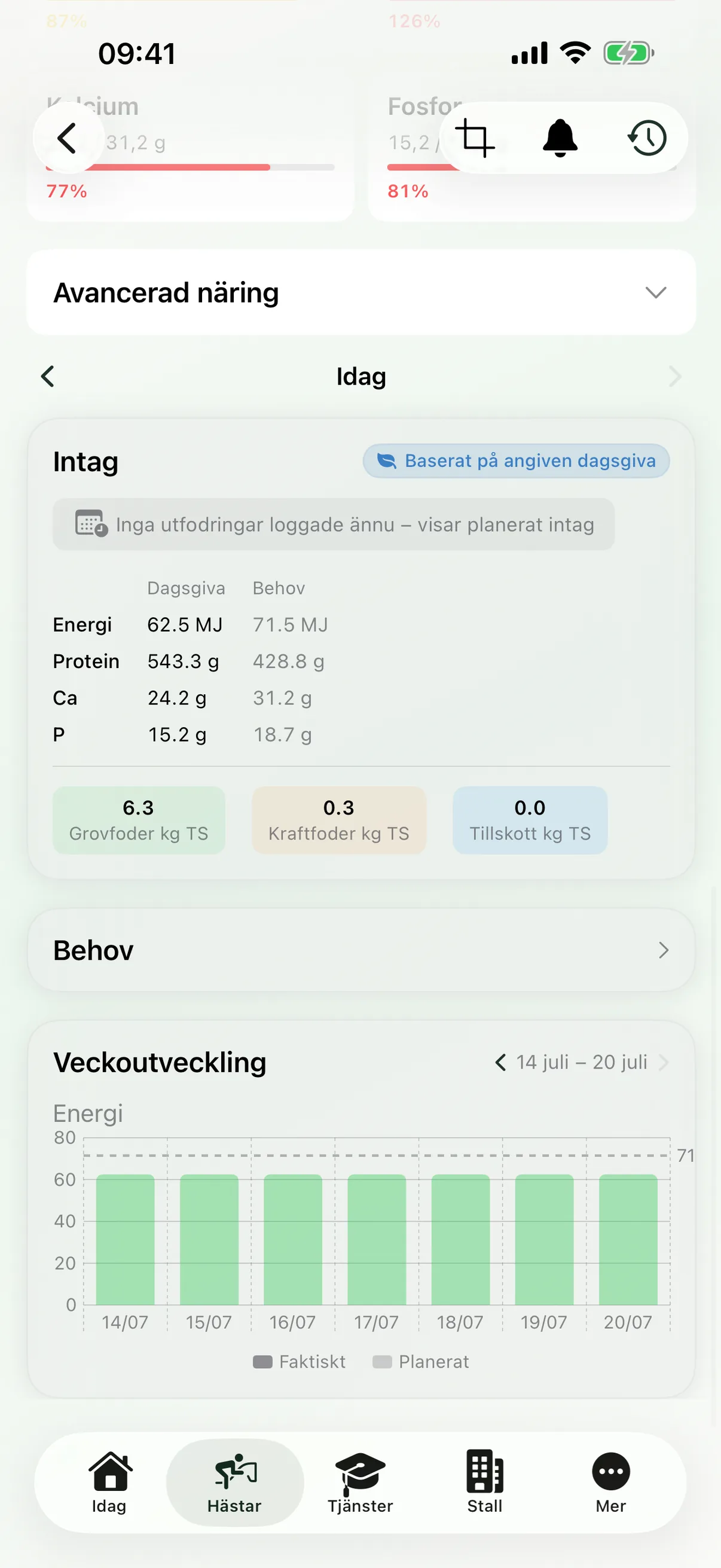
EquiDuty links forage analysis, a feed plan per horse, today's feeding and feed stock in one flow. The right portion travels all the way to whoever is feeding, and stock, forecasting and extra feed billing connect in one place – close to everyday work.
Build a feed plan per horse from forage analysis and real feed products.
Show today's feeding on your phone so the right portion follows through – without nagging.
Keep feed stock, forecasting and extra feed billing in one place.
Daily feeding and a feed plan per horse in EquiDuty
For the horse
The right portion every feed
For the stable
Stock with a head start
For finances
Fair feed billing
How do feed plans, feeding and stock connect?
A feed plan does the most good when it carries through to today's feeding, stock forecasting and cost tracking.
A feed plan per horse
Every horse gets its own feed plan with times, feed types, quantities and any special instructions. What applies to that horse shows up where the work happens, not on a note in the feed room.
Scheduled portions with time, feed type and quantity per horse
Special instructions and notes close to the horse
Add a one-off extra portion with a comment
Tick off each portion once it's given
From forage analysis to portion
Register forage batches for hay, haylage, silage and grazing with nutritional values from the lab. Upload the PDF forage analysis and AI reads out the values for you.
Forage batches with harvest date, dry matter, energy, protein and minerals
AI import of forage analysis straight from the lab's PDF
Extracted values shown with a confidence level and adjustable by hand
Link the batch to feed types so nutritional values fill in automatically
Today's feeding on your phone
Today's feeding gathers every planned round and shows how far the stable has got and what each horse has had. Whoever is feeding ticks off or skips with a reason – no nagging, no whiteboard.
All of today's rounds with progress for the whole stable
Mark a single horse, or all of them at once, as done
Skip a portion with a stated reason
Custom feeding times such as Morning, Afternoon and Evening
A feeding schedule laid out by date and feed type
Feed stock with a forecast
Feed stock tracks balance, minimum levels, reorder points, value, expiry dates and storage location for feed and everything else. The stock forecast works out usage over the last seven days and tells you when the shelf runs out.
Balance, minimum level and reorder point per product
Stock transactions for restocking, usage, waste and adjustment
Delivery records with supplier, invoice number, bale count and dry matter
A stock forecast with days remaining and an estimated run-out date
Warnings for low levels and feed that's about to run out
Fair billing for extra feed
Set the daily ration included in livery and the price for feed above it. EquiDuty reports each horse's forage usage against its ration and creates the figures for billing anything extra.
Feed ration settings with a daily ration per feed type
A custom price per kilo for usage above the ration
A monthly report of excess usage per horse
Invoice lines for extra feed created automatically
A horse's usage against its ration shown on the horse's profile
An overview of cost and usage
The feeding overview shows feed cost, usage trends and how much actually gets done per week or month. The usage analysis breaks it down by feed type and horse so you see where waste and cost sit.
Total cost, daily average and cost per horse
Usage trends per feed type by day, week and month
Horse-against-horse comparison and the share of waste
Feed types for forage, concentrate, supplements and medication with warning notes
A feeding history showing who changed what and when
Questions about horse feed plans
Answers about forage analysis, individual portions, feed stock, extra feed, and how the information shows up for whoever is feeding.
What is a horse feed plan?
A feed plan sets out what a horse should eat over a day. It's usually based on forage analysis, the horse's weight and workload, and its need for energy, protein, minerals and supplements. In EquiDuty you build the feed plan from real feed types and quantities, so the plan is easy to follow in daily work.
How does AI import of forage analysis work?
You upload the PDF forage analysis from the lab in a short wizard. AI reads out nutritional values such as dry matter, energy, protein and minerals, and shows each field with a confidence level. You can adjust the values by hand before saving, and link the batch to the feed types it applies to, so you don't have to type in the numbers yourself.
Does whoever is feeding see the right portion on their phone?
Yes. Today's feeding shows every horse's planned portions with time, feed type, quantity and any special instructions. Whoever is feeding ticks off one horse at a time or all at once, and can skip a portion with a stated reason. The portions don't need reading off a whiteboard or an old note.
Can I see when feed is about to run out?
Yes. The stock forecast works out usage over the last seven days and shows how many days are left and an estimated run-out date for every stock item. Feed stock also warns about low levels and feed that's about to run out, so you can order in time instead of being left with an empty shelf.
How does billing for extra feed work?
You set the daily ration included in livery and a price per kilo for anything above it. Every month EquiDuty reports each horse's forage usage against its ration, works out any excess, and creates invoice lines for extra feed. That gives a fair split where whoever uses more also pays for more.
Can I track feed cost per horse?
Yes. The feeding overview shows total cost, the daily average, and cost per horse per week or month, using data from stock records. The usage analysis breaks down consumption and waste per feed type and lets you compare horse against horse, so you see where the money and the feed are going.
Explore more around horse data and stable workflows
The feeding flow gets stronger together with the horse registry, invoicing and the wider stable software.